3D Puzzle Design case study. How far can I push a single core mechanic to craft different challenges in a way that is accesible for eveyone and keeps the average player engaged?
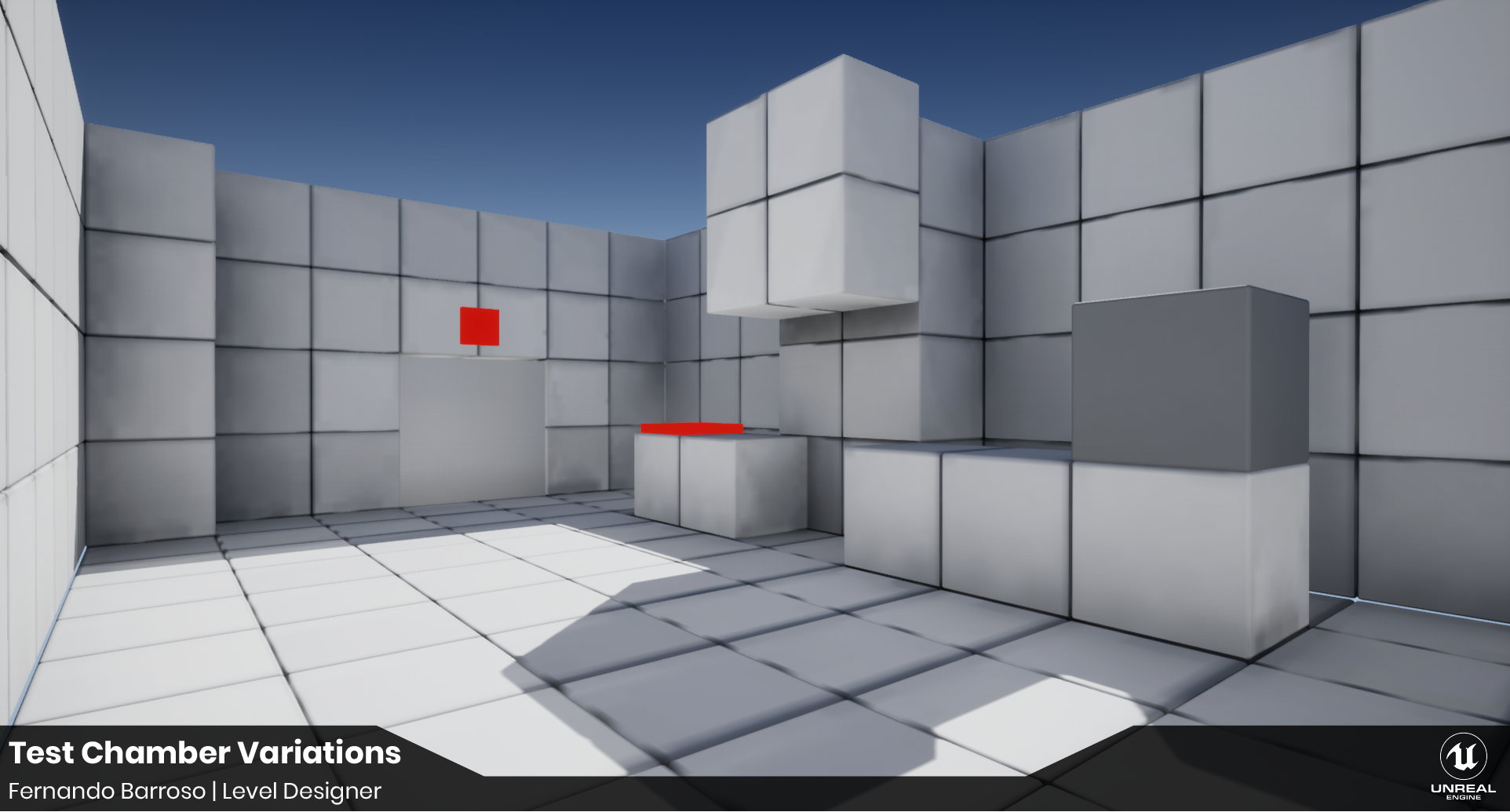
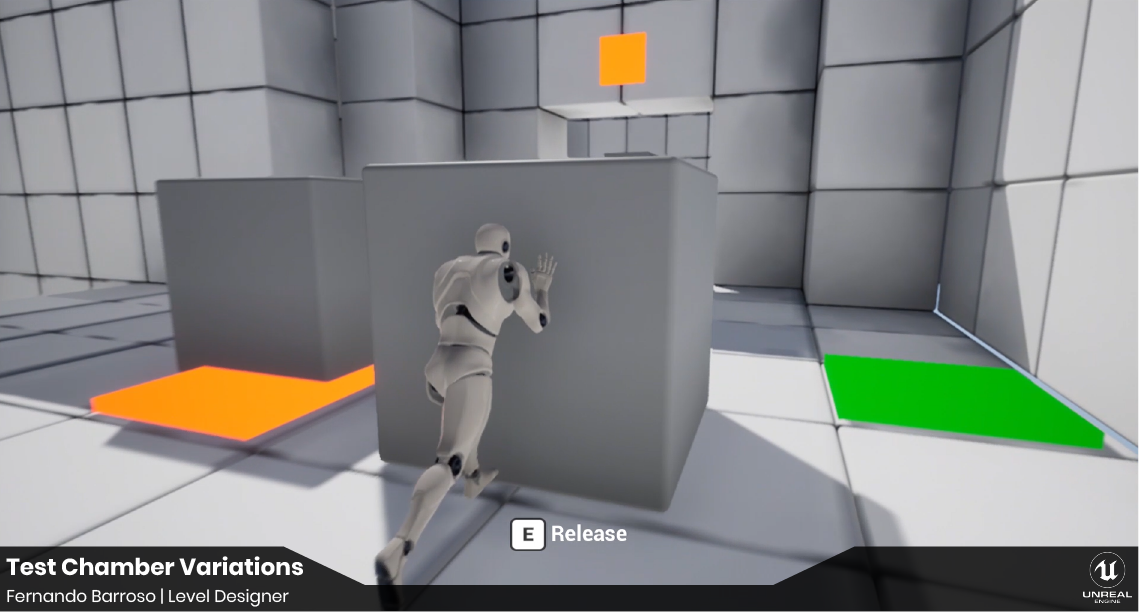
"Test Chamber Variations" is a personal project I worked on to develop my 3D puzzle level creation skills. The Portal vibe and aesthetics is something I definitely wanted to achieve, but I wouldn't be working with the portals mechanic since I wanted to give it a twist. Instead, a pushing boxes mechanic is the protagonist, and a whole set of rooms (chambers) is designed around this concept.
Another goal I wanted to achieve with this project, this time on terms of difficulty curve, is to create a puzzle level that everyone, regardless of their previous experience with videogames, could be able to understand and beat. Thats why I followed a popular and effective level design structure called Kishōtenketsu to craft the chambers. In essence, the term breaks down as:
The level consists of 4 puzzle chambers that, in addition to the Start and End ones, makes it up to 6 in total. The aim is to slowly introduce the pushing box mechanic and scale its difficulty accordingly through the upcoming chambers.
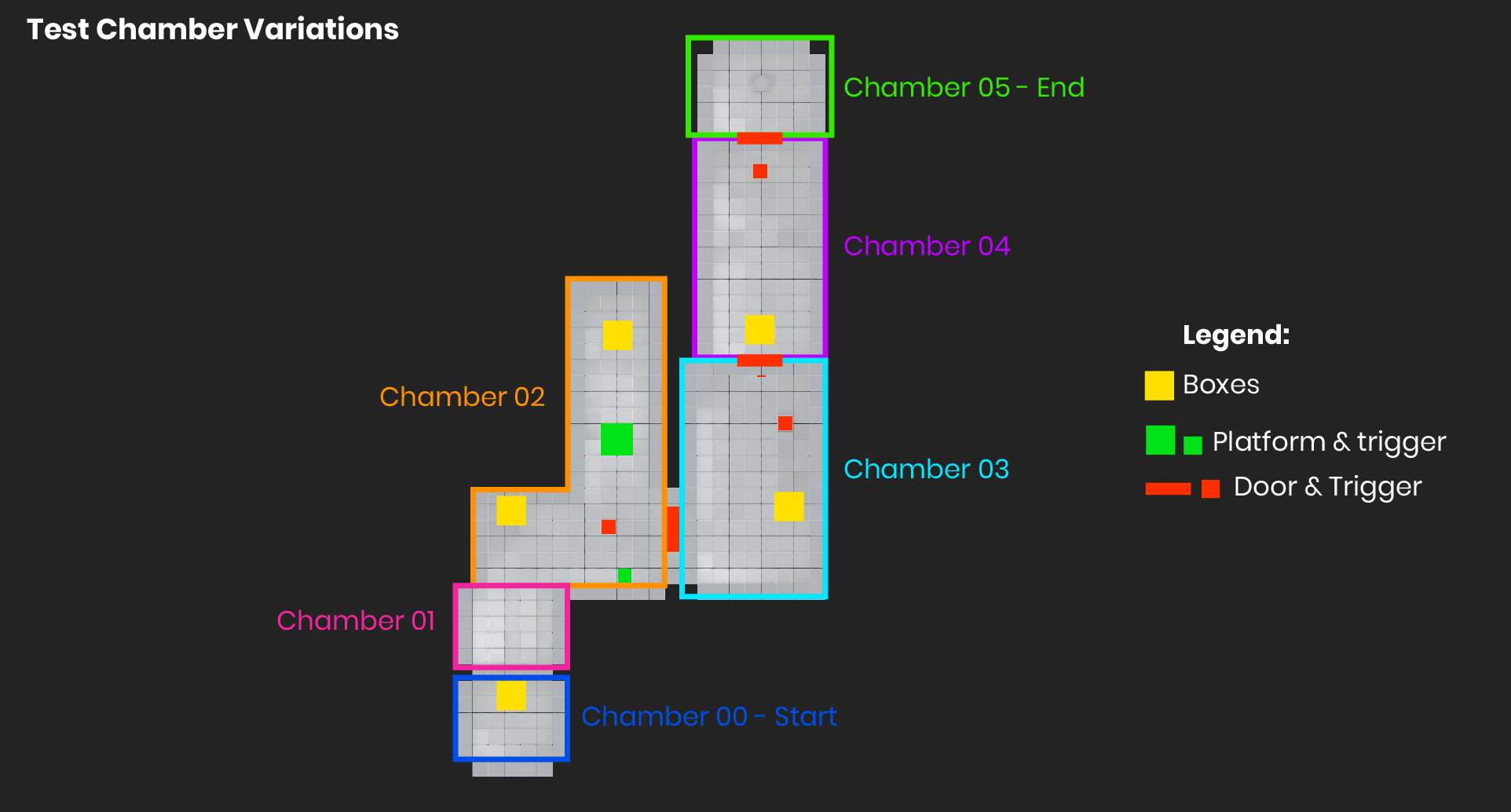
The whole point of chamber 1 is to get the player used to the new mechanic and show them that they can jump on the boxes as a way to get higher. That's why I set a pre-established path to follow so there player knows where to go.
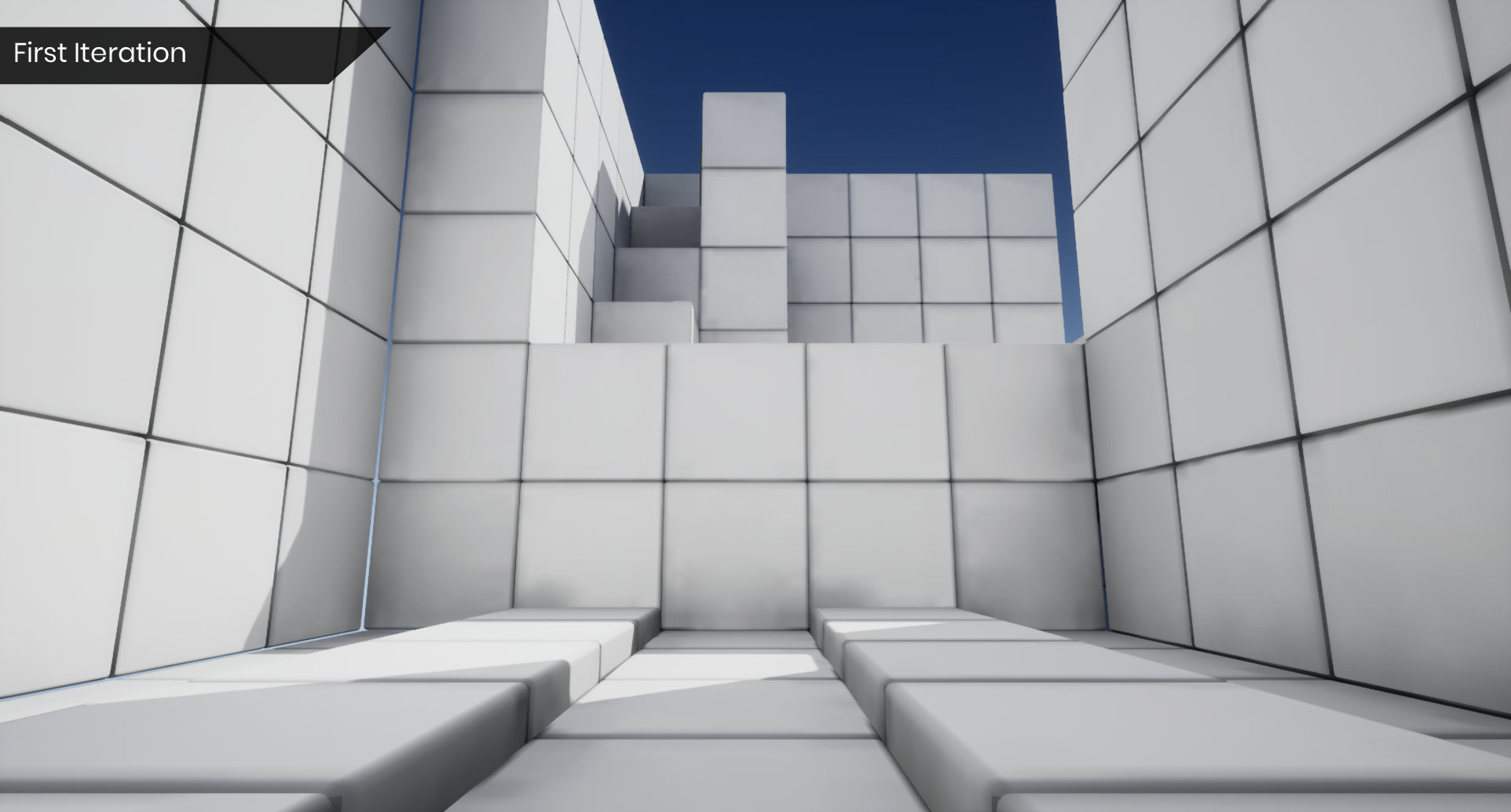
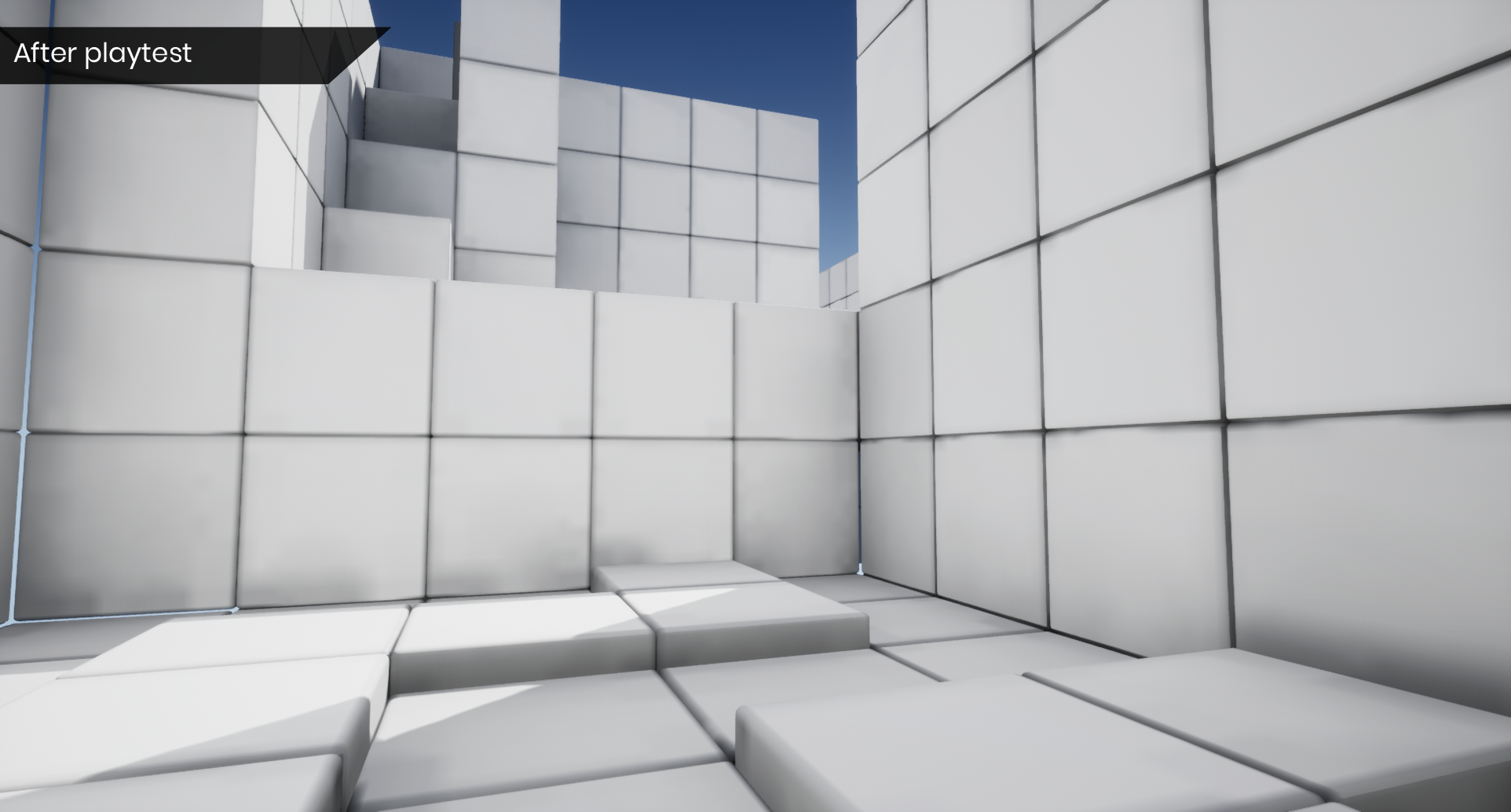
After a few playtest sessions, however, I realised players discovered a purposedly hidden box (which is the key for Chamber 03), even before jumping into Chamber 02.
Just by making a small change in direction in the box path that show the images below, I was able to prevent the box from being spotted that early. In the end, this change was also benefitial in the way that played discovered earlier that they actually can move the boxes to the sides instead of alwais pushing to the front.
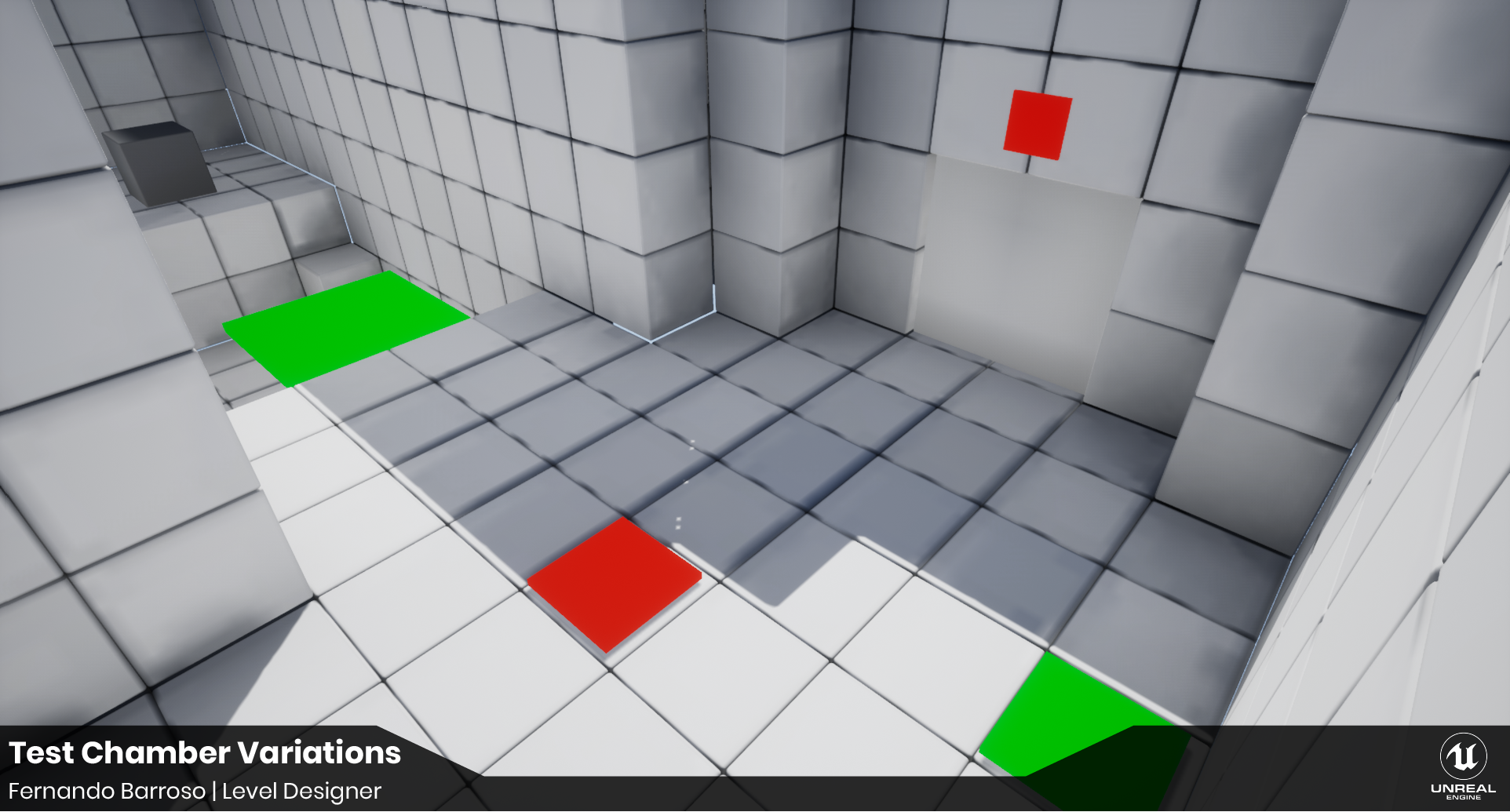
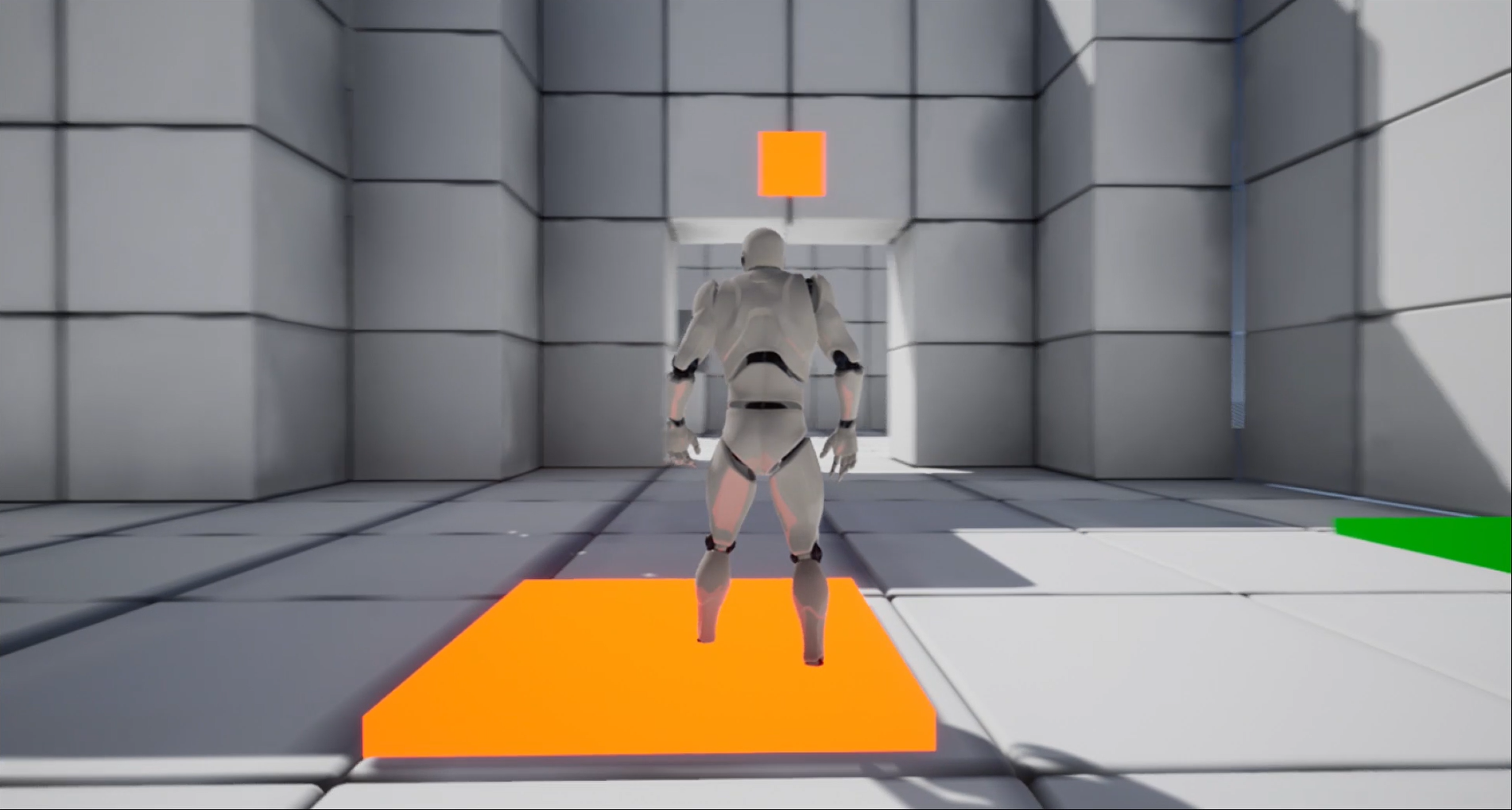
The second chamber is merged with the first, so there is no door between both. This chamber introduces switch buttons, which activate the element of the same color when pressed by the character or the box, followed by a change in their emisive material and an audio cue (their chosen colors are also intended to draw the player's attention right after entering the chamber, and therefore help avoid spotting the secret box).
In the case of the door switch, it is placed at just the right distance from its door, so when the player leaves and switches it off walking towards the door, the closing animation triggers and it shuts down completely just before the player reaches it.
The platform switch, however, moves the platform along the pit when pressed and freezes it in place when unpressed. The key, therefore, is to use the platform to get the box to the switch side, and leaving it above in order to keep the door open.
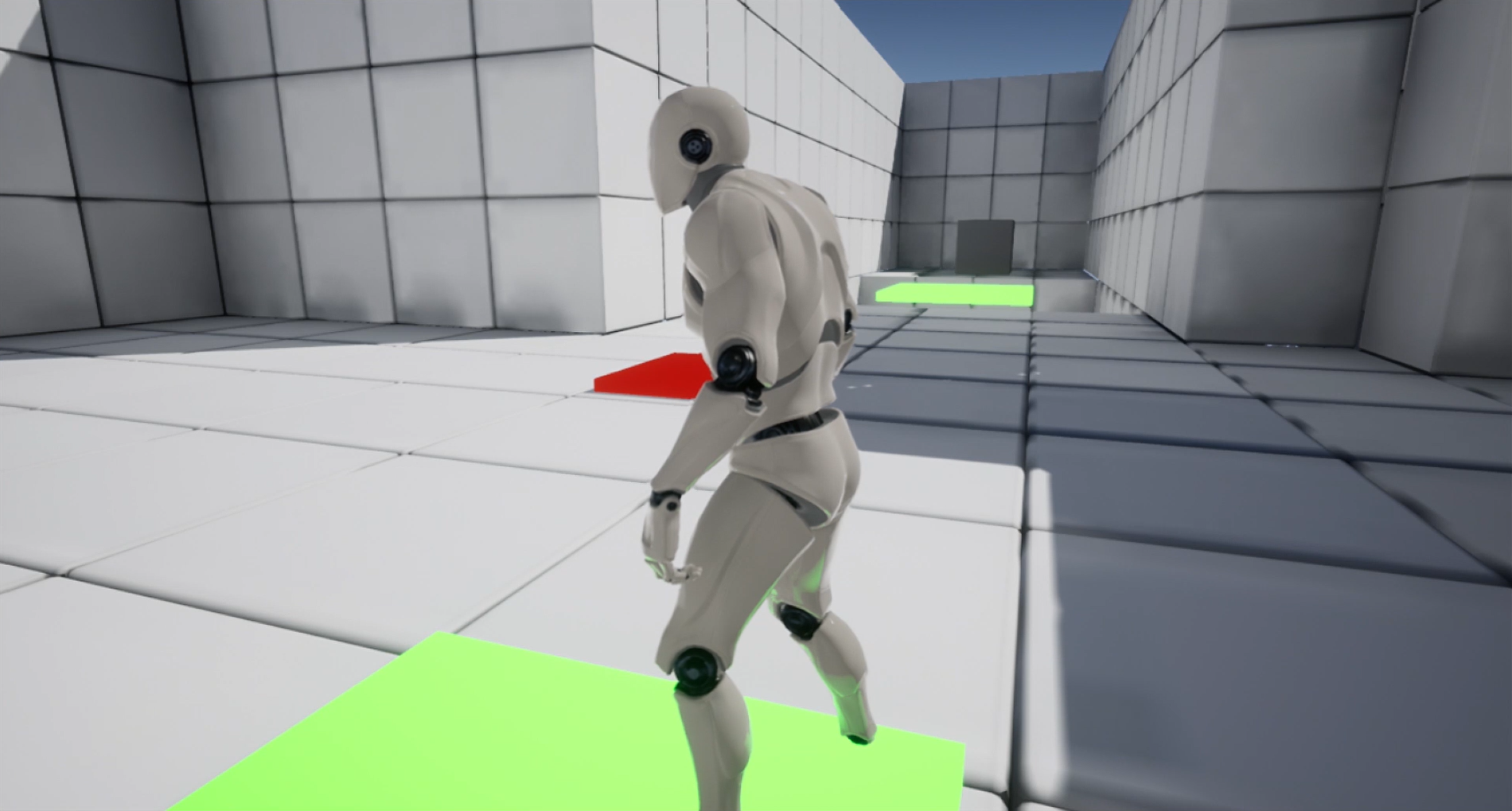
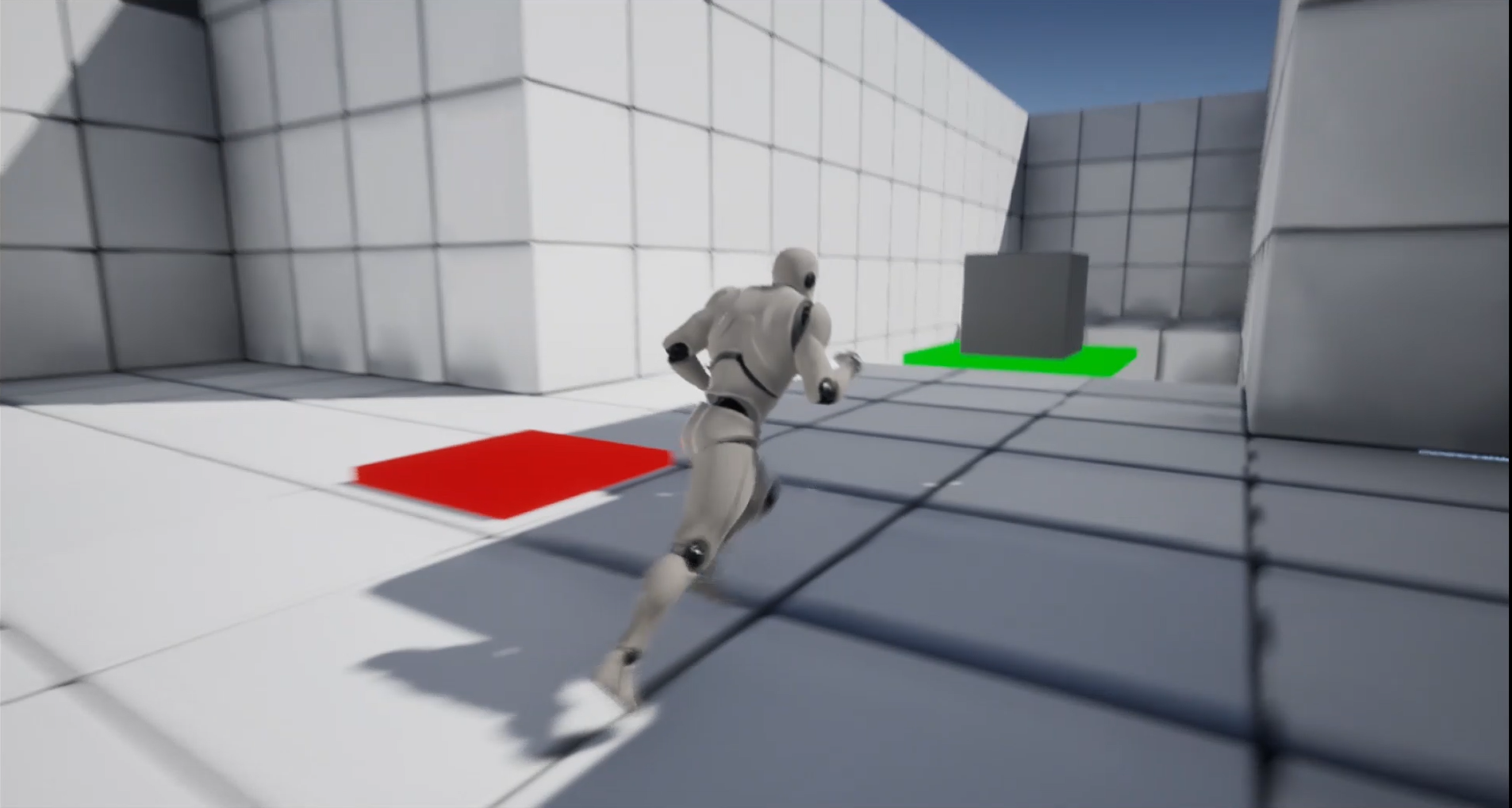
My main focus with Chamber 03 was to make the player think outside the box (hah, get it), and break the convention that the solution must be in the same place as the problem.
Here's when the hidden box from Chamber 02 enters the ring! It is placed so when the players returns, clueless, to Chamber 02, it can be perfectly seen from that position. The solution is to use that box as a bridge between the other box and the door button.
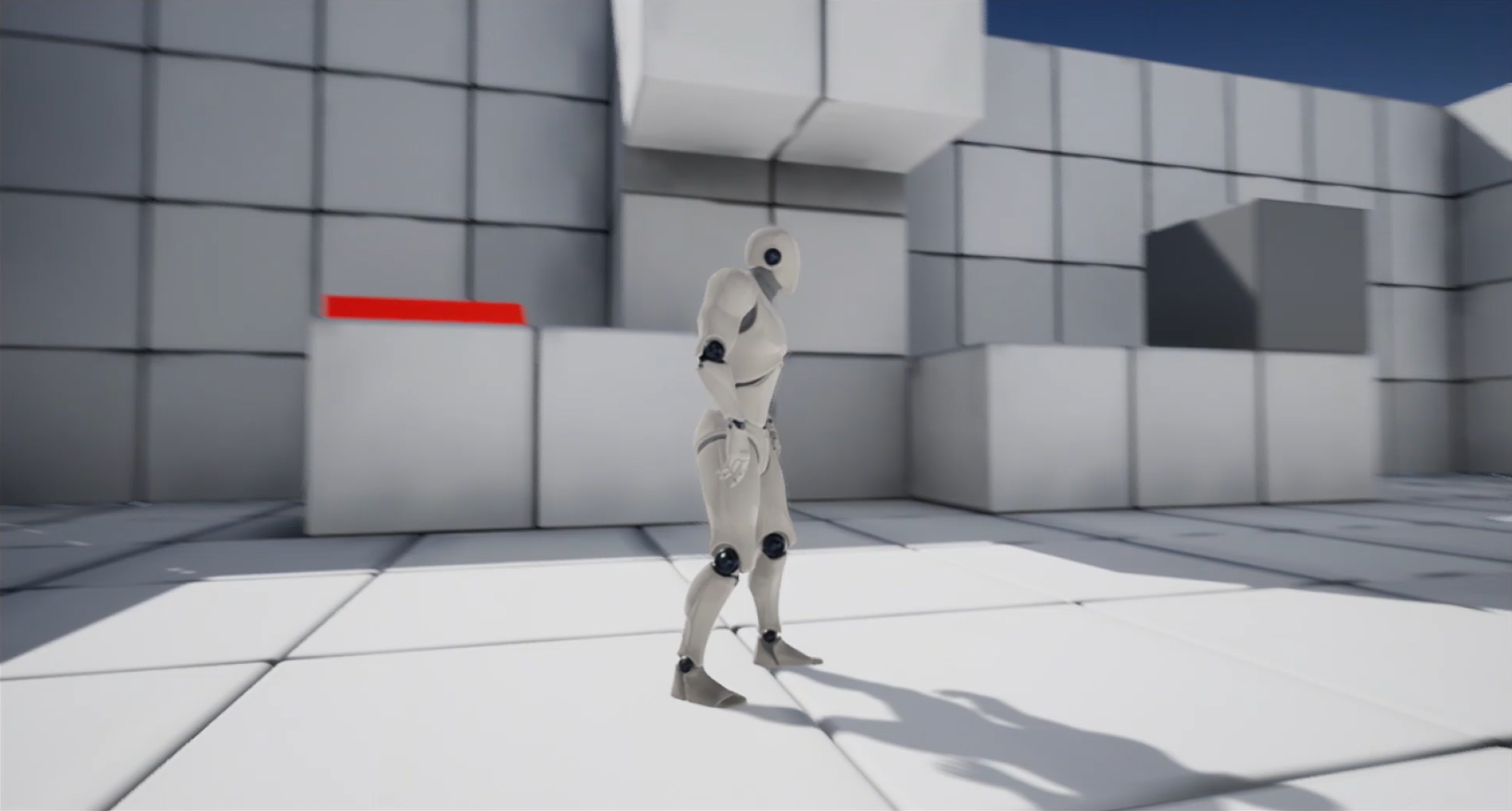
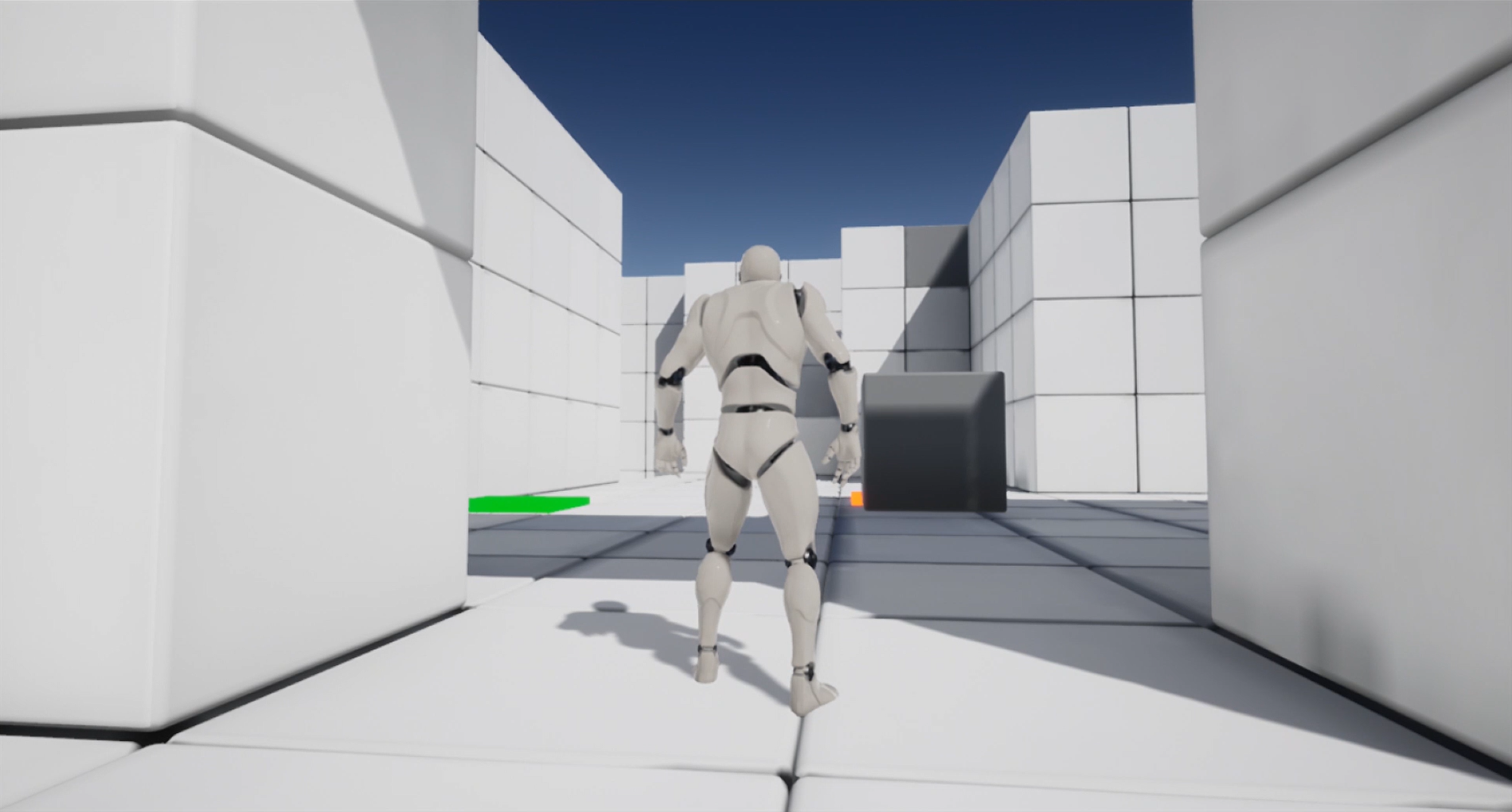
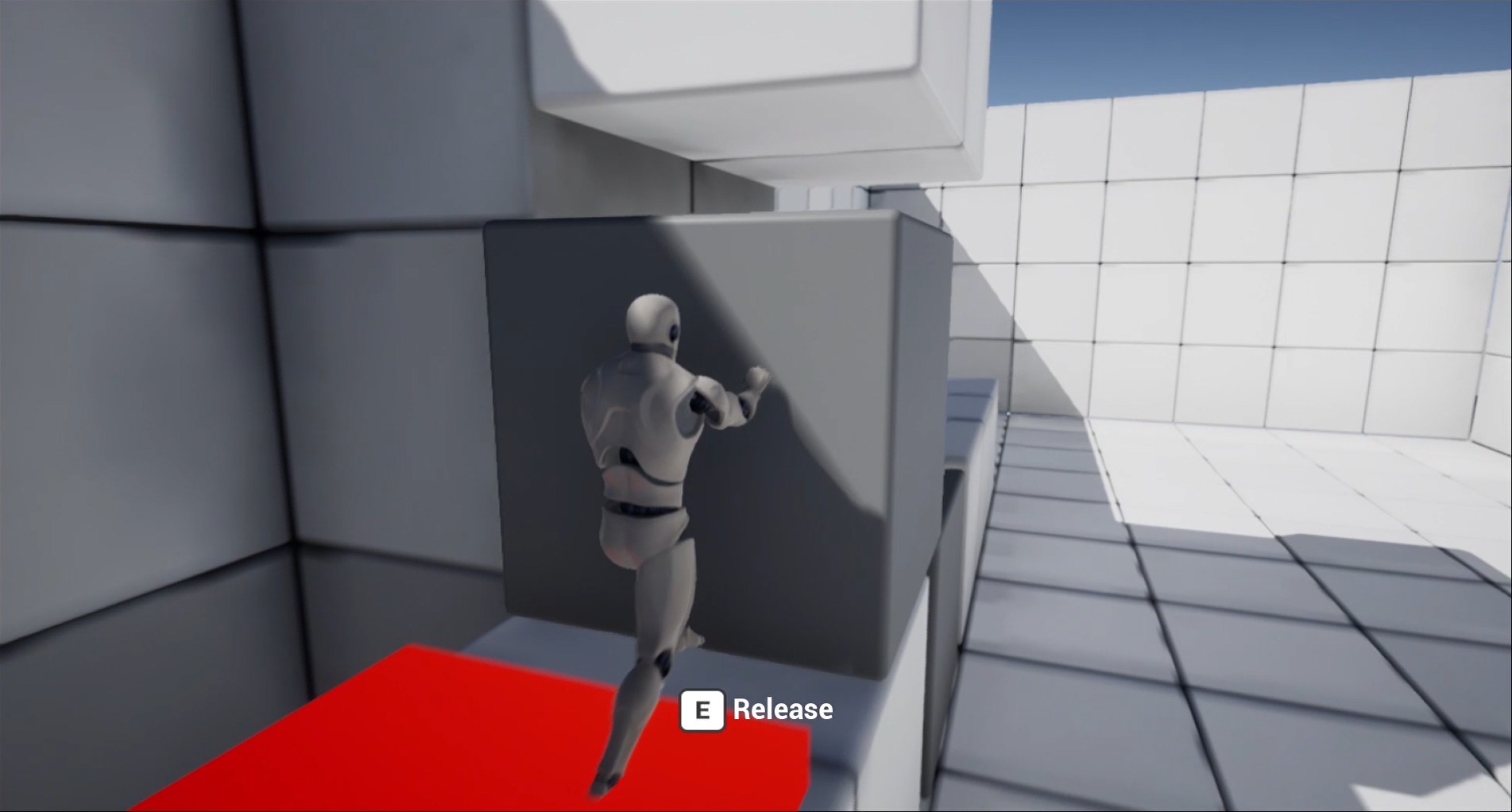
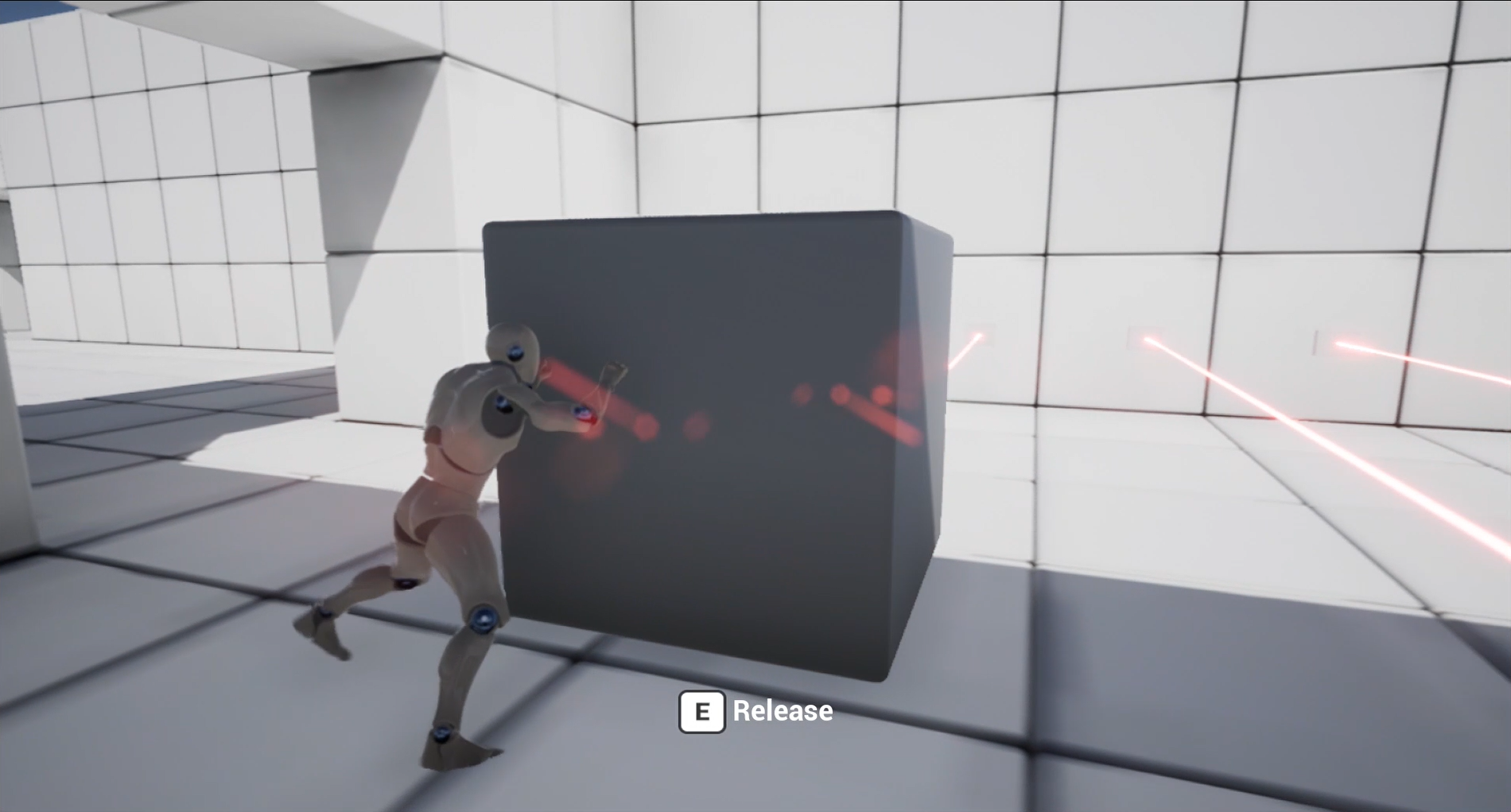
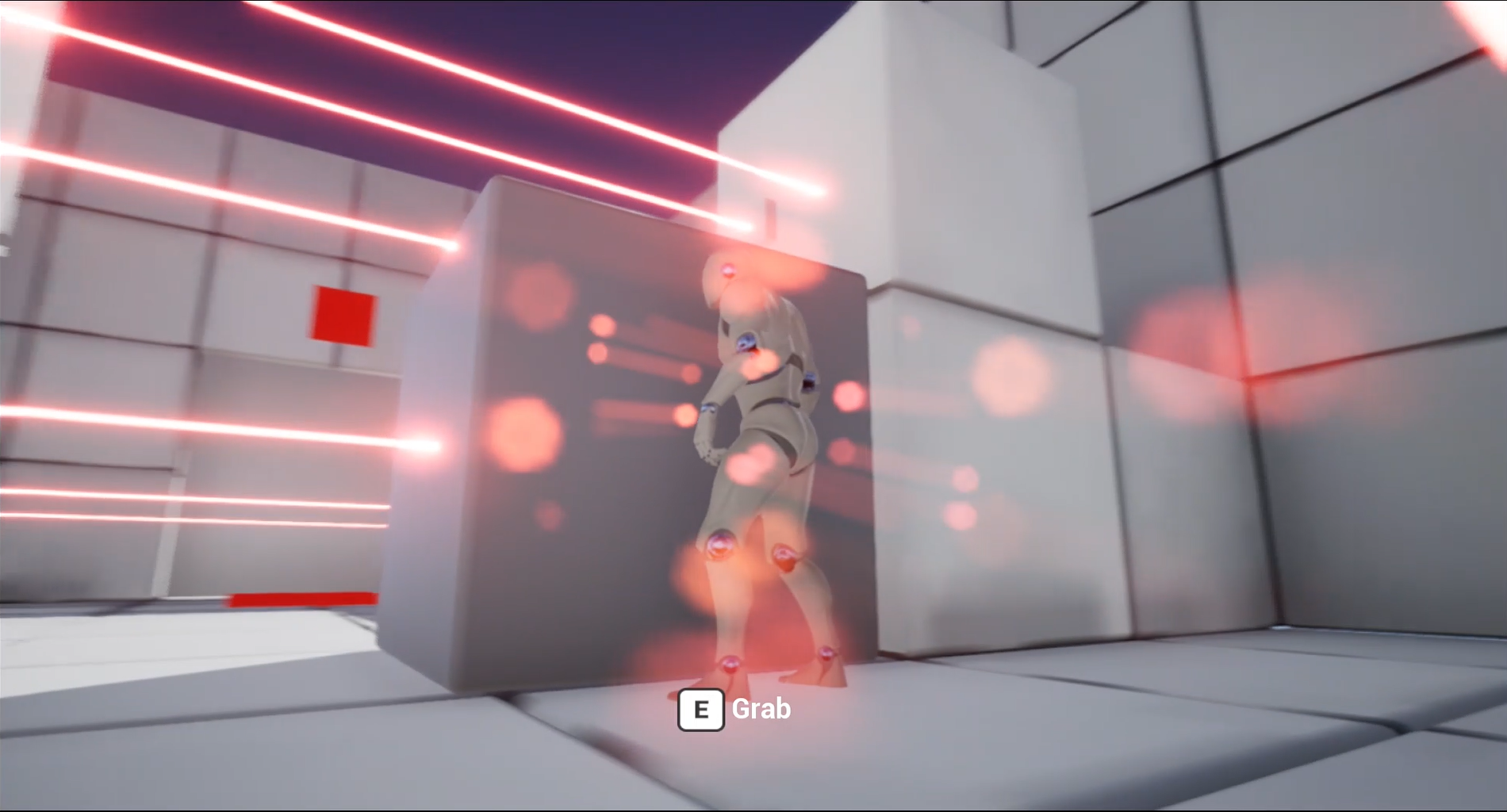
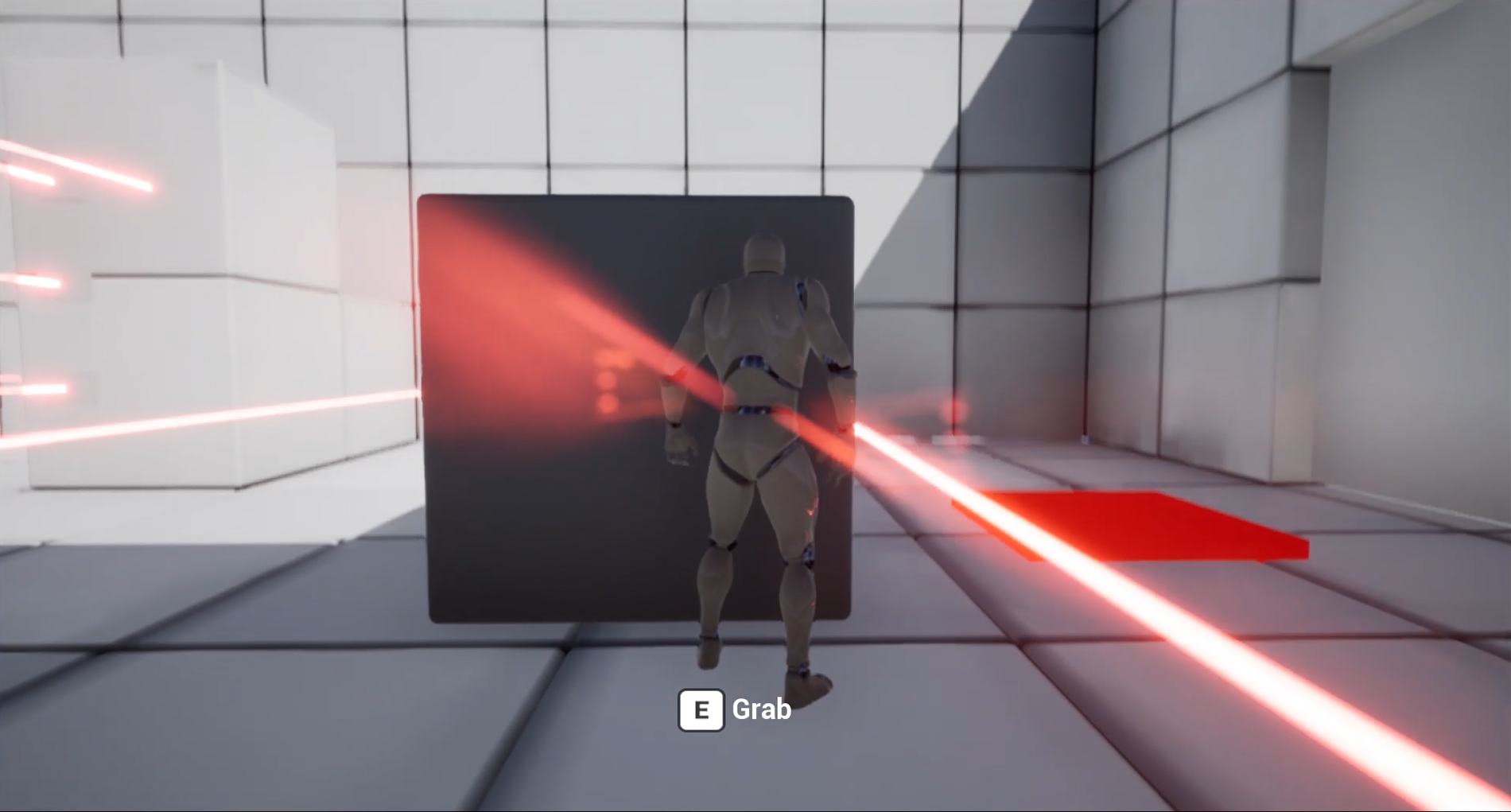
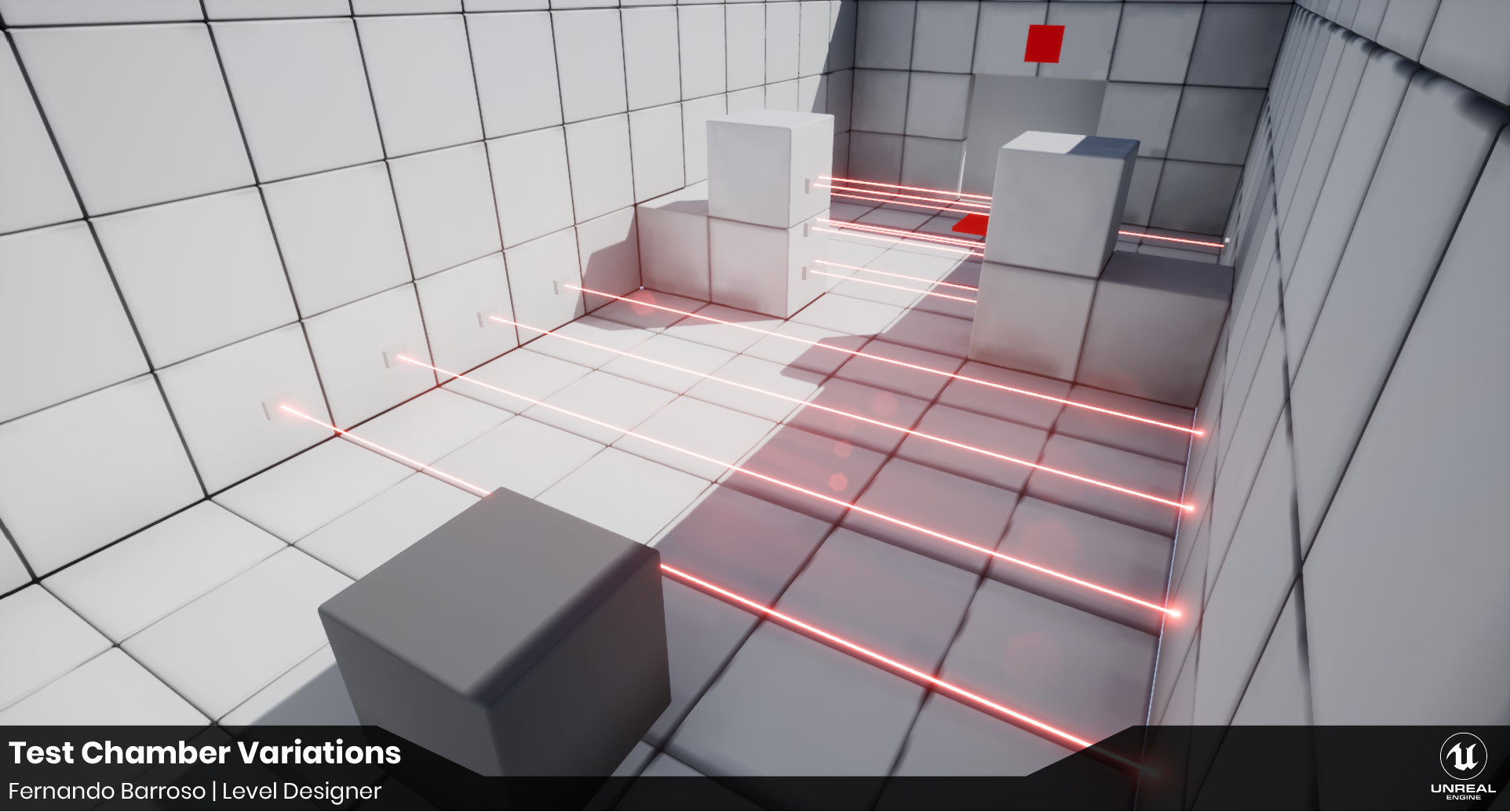
We arrived to the final chamber, the laser one. As the conclusion, here the player must use all that they've learned about the boxes to make their way to the end.
The lasers instakill the player if they dare to touch them, although I tried to stand out their danger giving them a vibrant red and adding threatening laser noises. The key here is to use the boxes as a shield to block the upcoming lasers.
An earlier version included movable lasers, but in the end I decided to cut them off as they didn't rely on the player's solving problems skill but more on their speed and reflexes, and it clashed with my premise to be accesible for everyone.